Need more views…go Cubs
Need more views…go Cubs
From now on, this is step one:
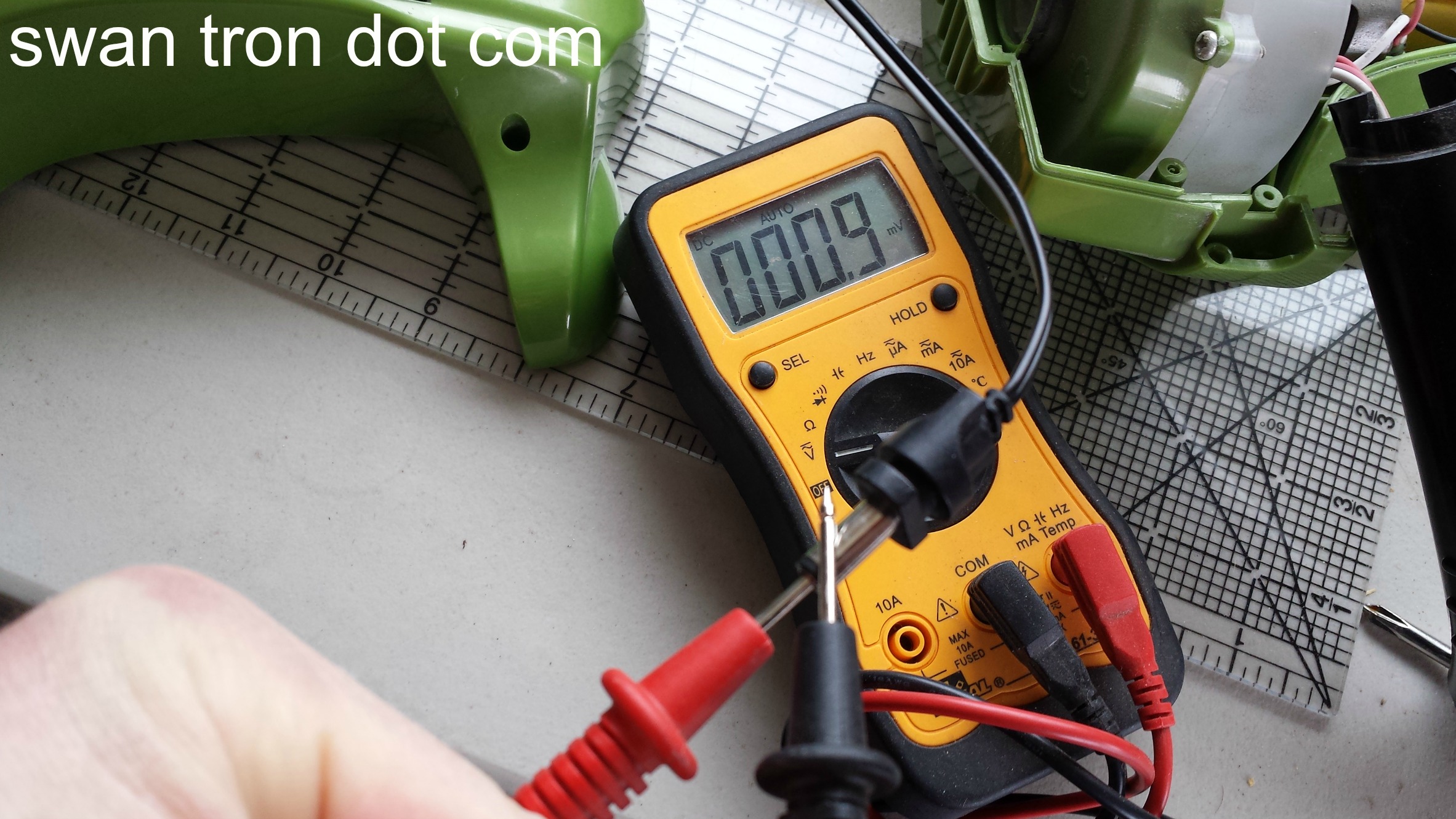
There were tens of steps before that step in the actual Shark hand-vac fix-it effort, but it really should have been step one. For this post, let’s call it step n. This was step n+1, which led to me assigning ‘whip out the multimeter’ as the new step one…
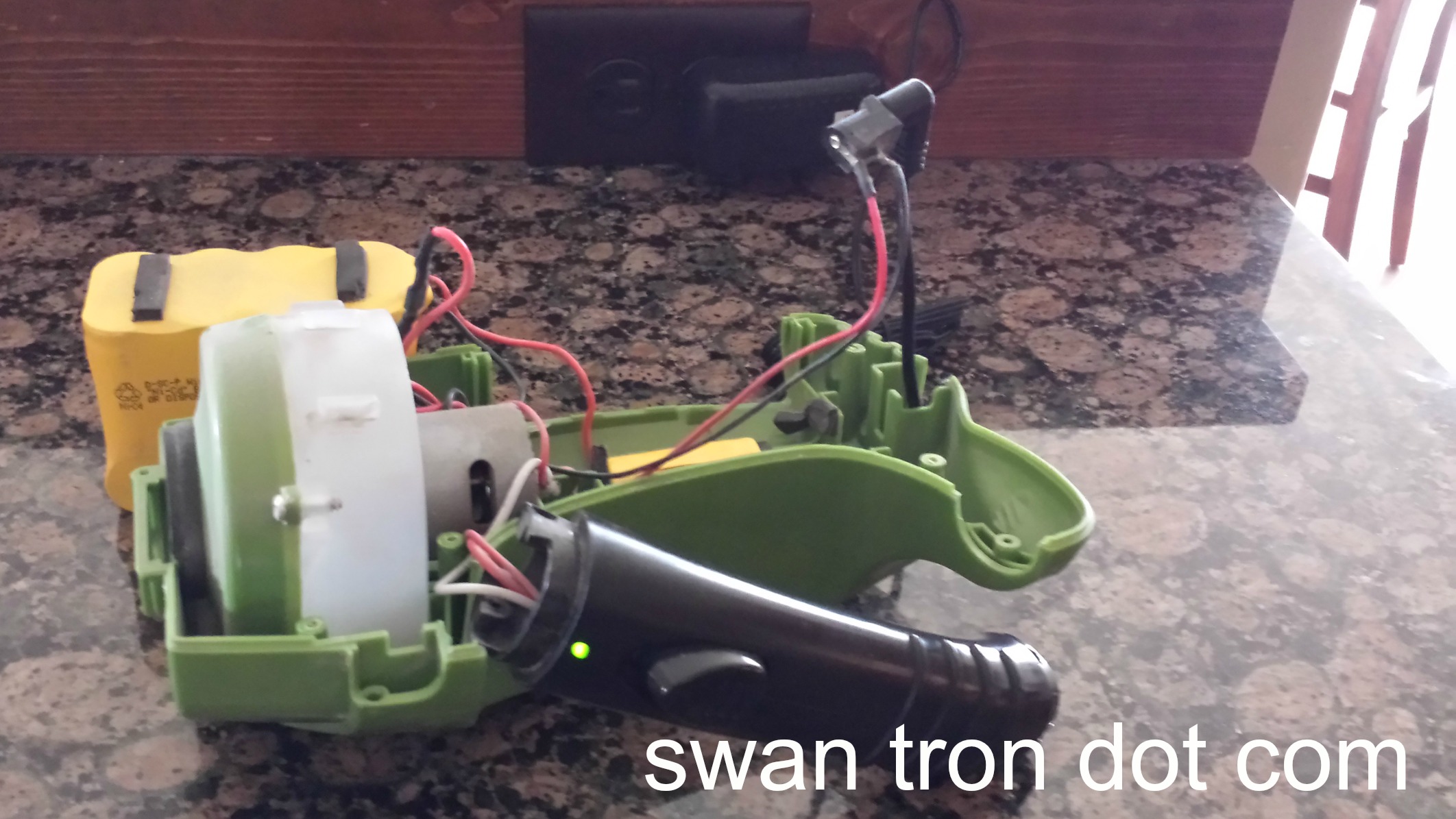
Yep. Didn’t need to do this step:
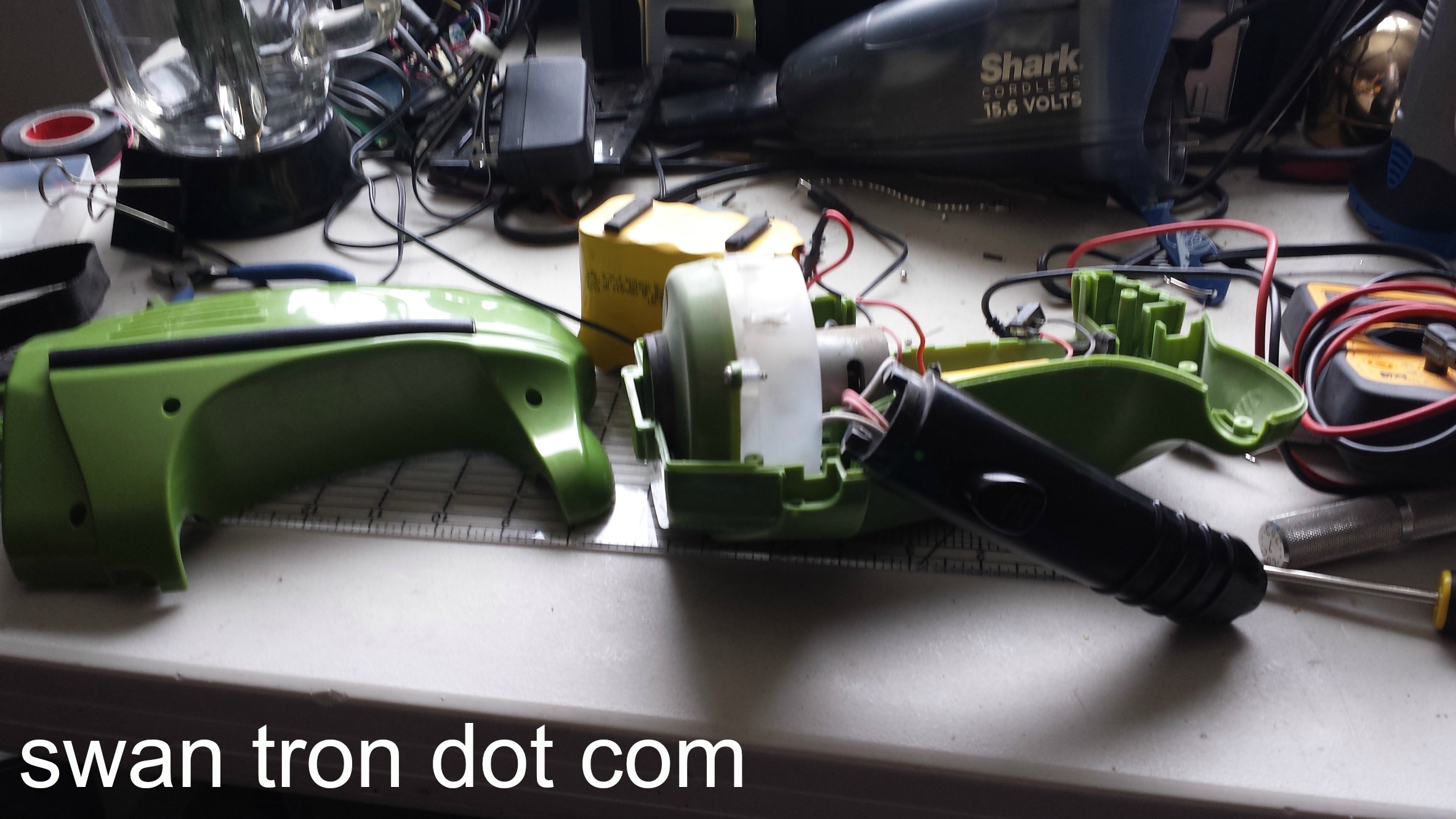
Didn’t need to do any steps < n actually. Just step n, which is now step one.
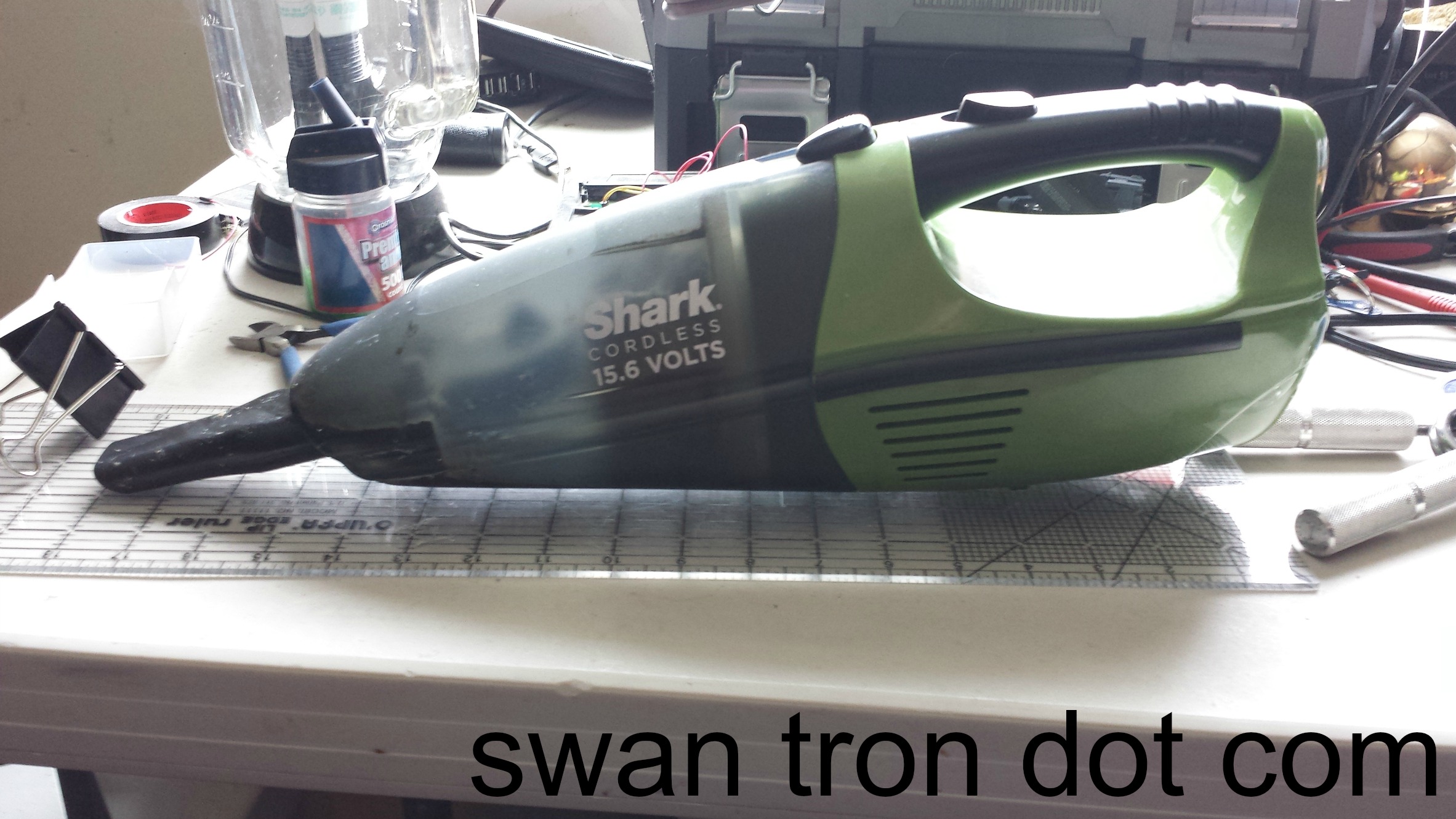
In summation, pull out your multimeter. The Shark works great, and can suck 20V and an Amp from any of the humidifier power sources scattered amongst the house. The power supply was borked, and I was maybe a bit too excited to crack something open than to debug properly. But anyway, we have designated step one, which is noteworthy.
…been doing some wheelin'

…wheelin’ around my assistant…
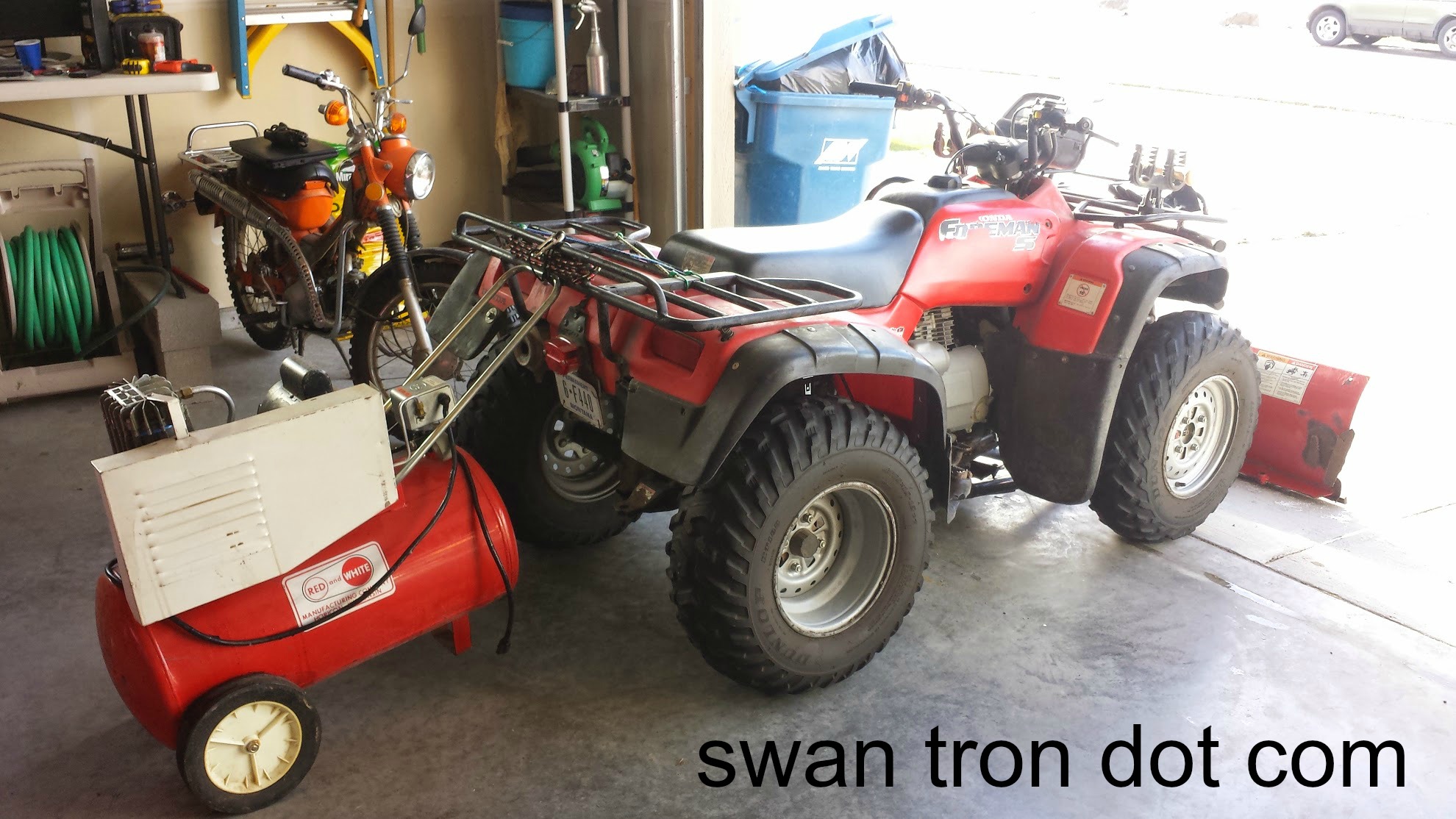
…wheelin’ some junk to the junk store…
Been doing a little gaming… 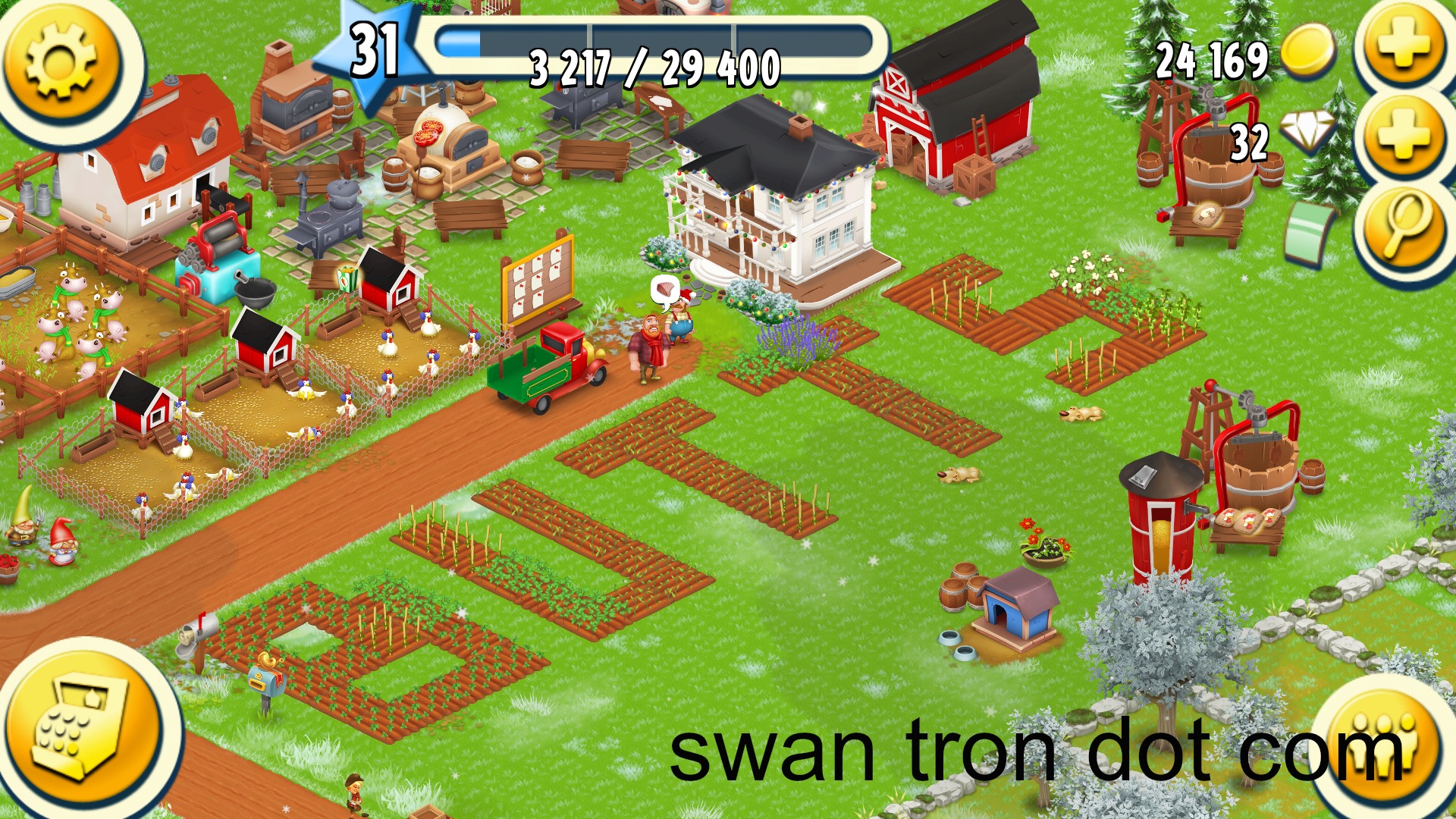
I had a 10’ stick of 3/4" copper pipe in the swan tron global HQ, so decided to make another end table. Same amount of torch…
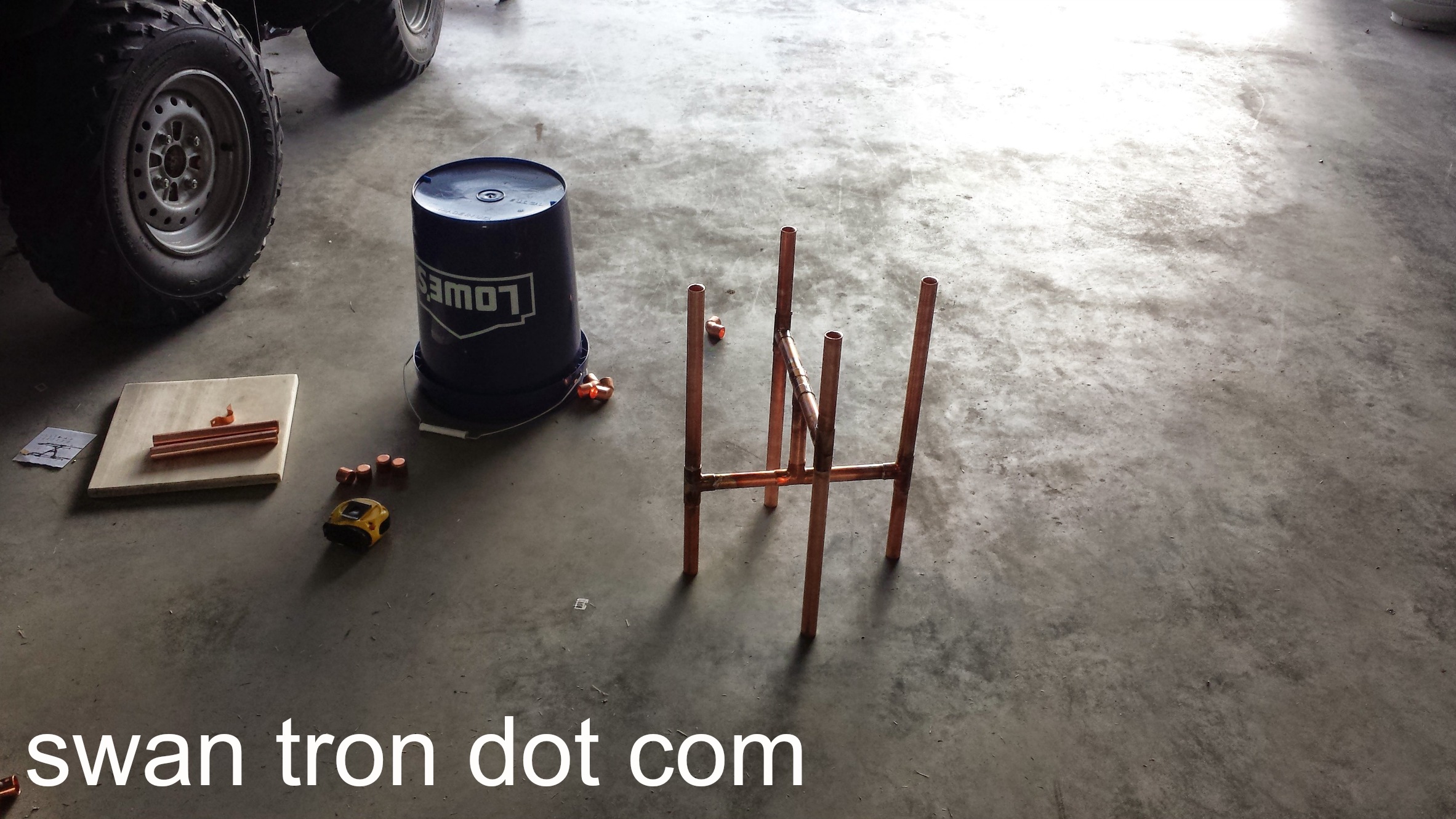
This time with more symmetry…
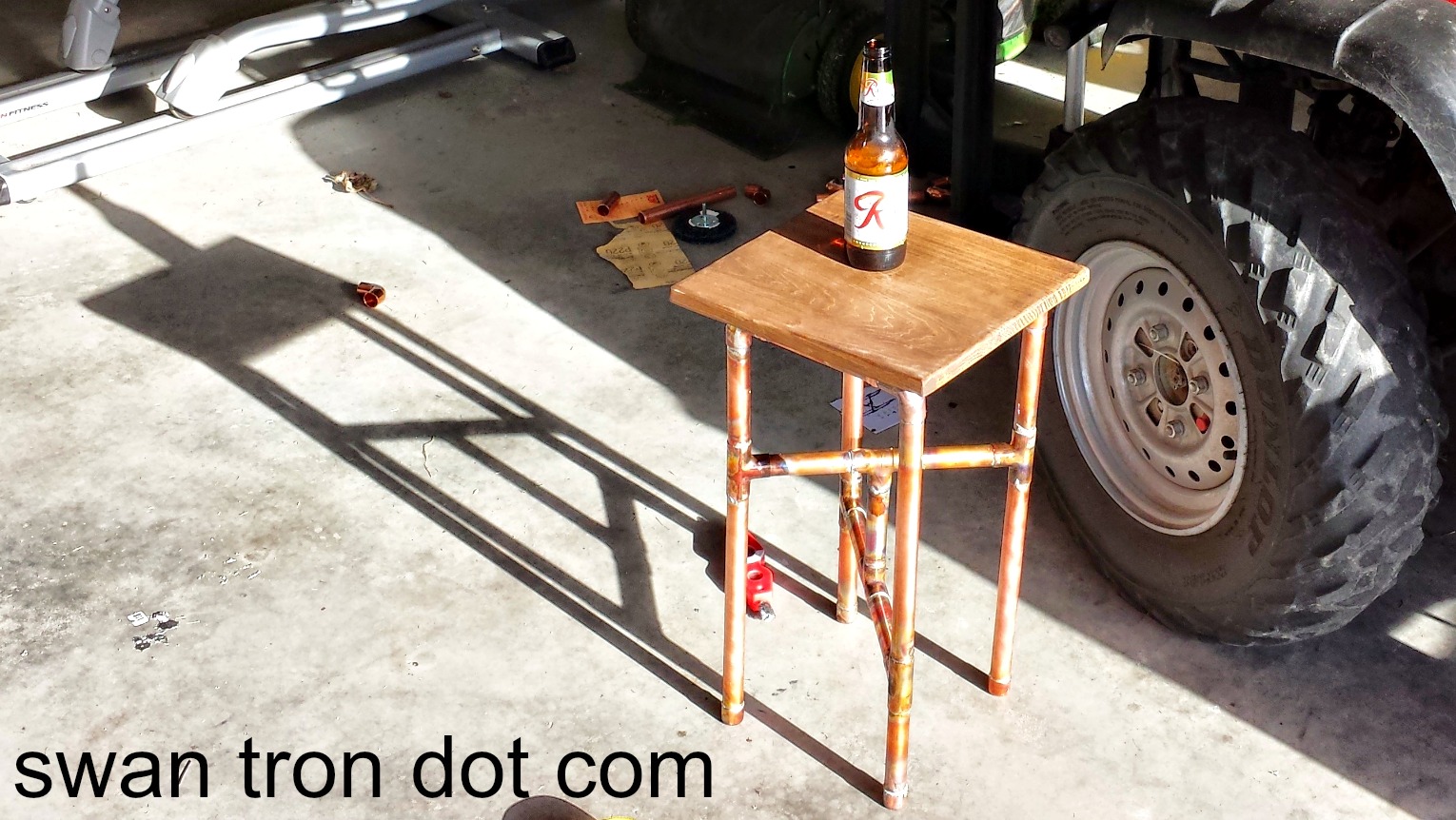
My goofy lab partner wasn’t available for a stress test photo op, but it would withstand the weight and destructive damage of scores of toddlers. Probably.
Devices everywhere. With root.
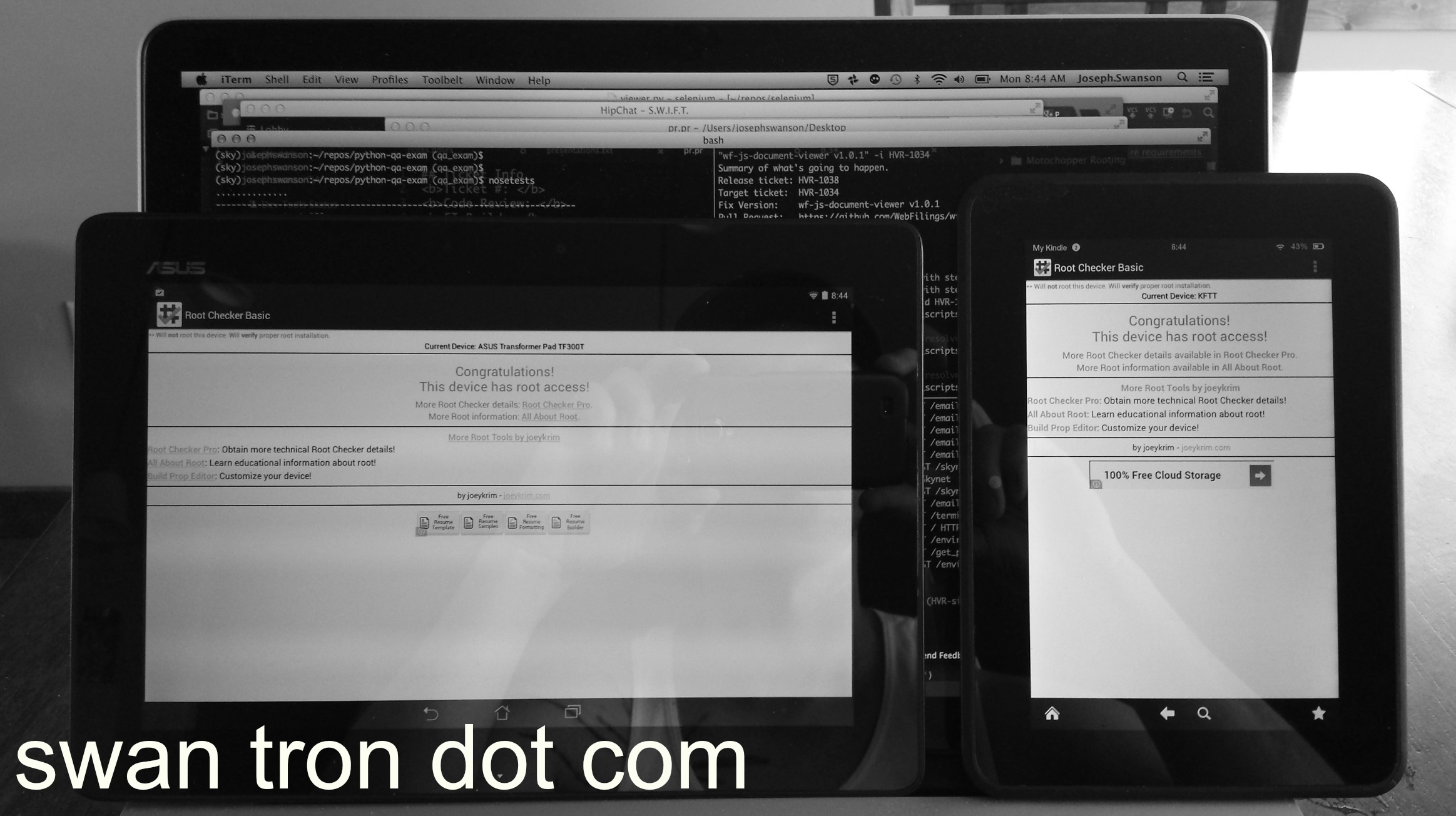
Over the past month, I’ve tackled two root projects…Emma’s Kindle Fire HD, and my Asus Transformer. My motivation was pretty straight forward for each. The Kindle worked perfectly fine but with an awful UI. The main use case is YouTube for a 2 y/o, and the stock launcher doesn’t do that well. Root and a custom launcher gets you there, so I did that. The specific version of Fire I have was supposed to be tricky to root. There were forums of people bricking them, and the general workaround seemed to be reverting to an older firmware and then trying the root exploit…which seemed to be generally available as a windows executable. Not happening. I decided to give rooting a shot by pushing the su binary and Google apk set over via ADB on my Mac, which worked perfectly. Not sure what the issue had been. Play Store achieved…Nova Launcher installed. Happy 2 y/o. The Asus was a different story…and the toughest root project I’ve had to tackle to date. The Transformer was a refurb from Woot, I think. I could look that up but I’m not going to. The combination of JellyBean and my particular firmware made any exploit attempts moot. I could not push via ADB, but the device acted like the files were invalid. Same method as pretty much anything else, but simply failing. I tried several methods I found online, but they all yielded the same outcome…except one really sketchy one. I managed to use a really, really iffy Chinese root manager called 授权管理. The download and exploit were all in Chinese. Awesome. It worked, and I immediately replaced that with su. There was a good 10 minute window running who-knows-what. Sort of disconcerting. Bloatware wiped, and the tablet runs crazy fast finally. I’ve been checking my logs, and nothing fishy has popped up…looks like the hack worked. Anyhow, two devices, each more usable. Go root.

Seriously, you two.
The small lab assistant and I tackled the robot arm project last weekend. Fifty percent of team swan tron embarked upon the assembly phase wearing bunny slippers…
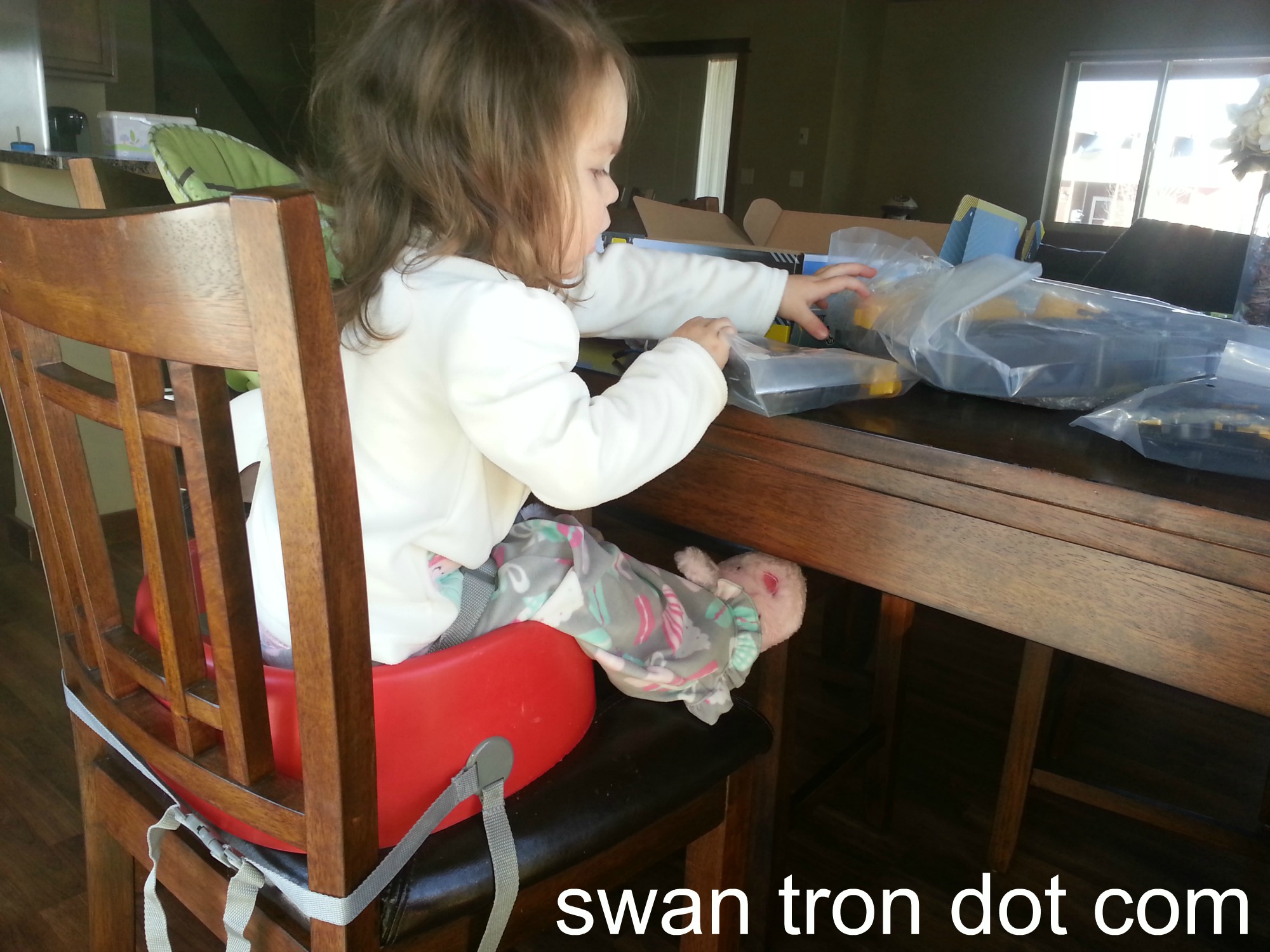
We did this in two big chunks, due to attention span limitations and nap purposes.
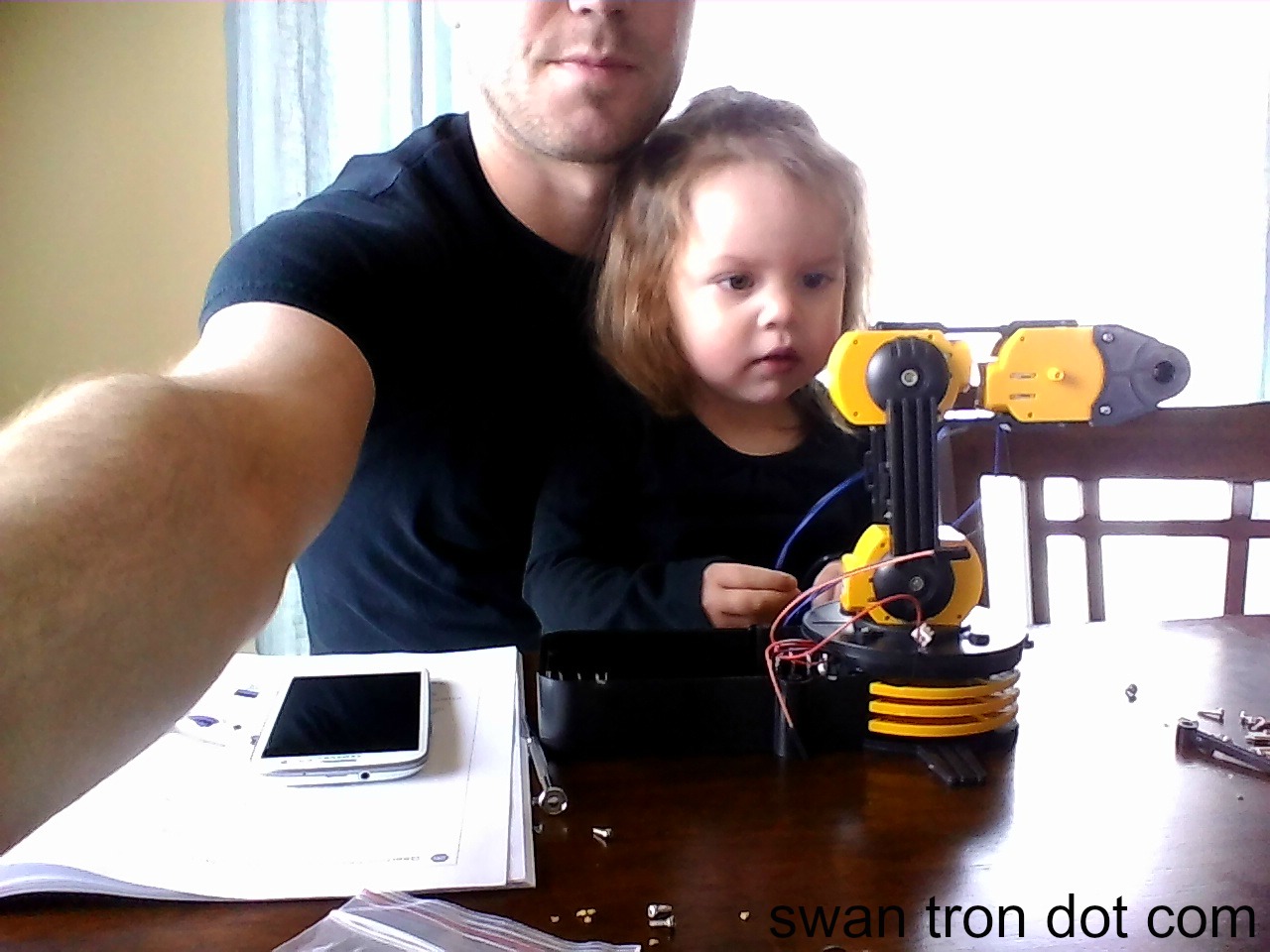
Testing Phase 1)
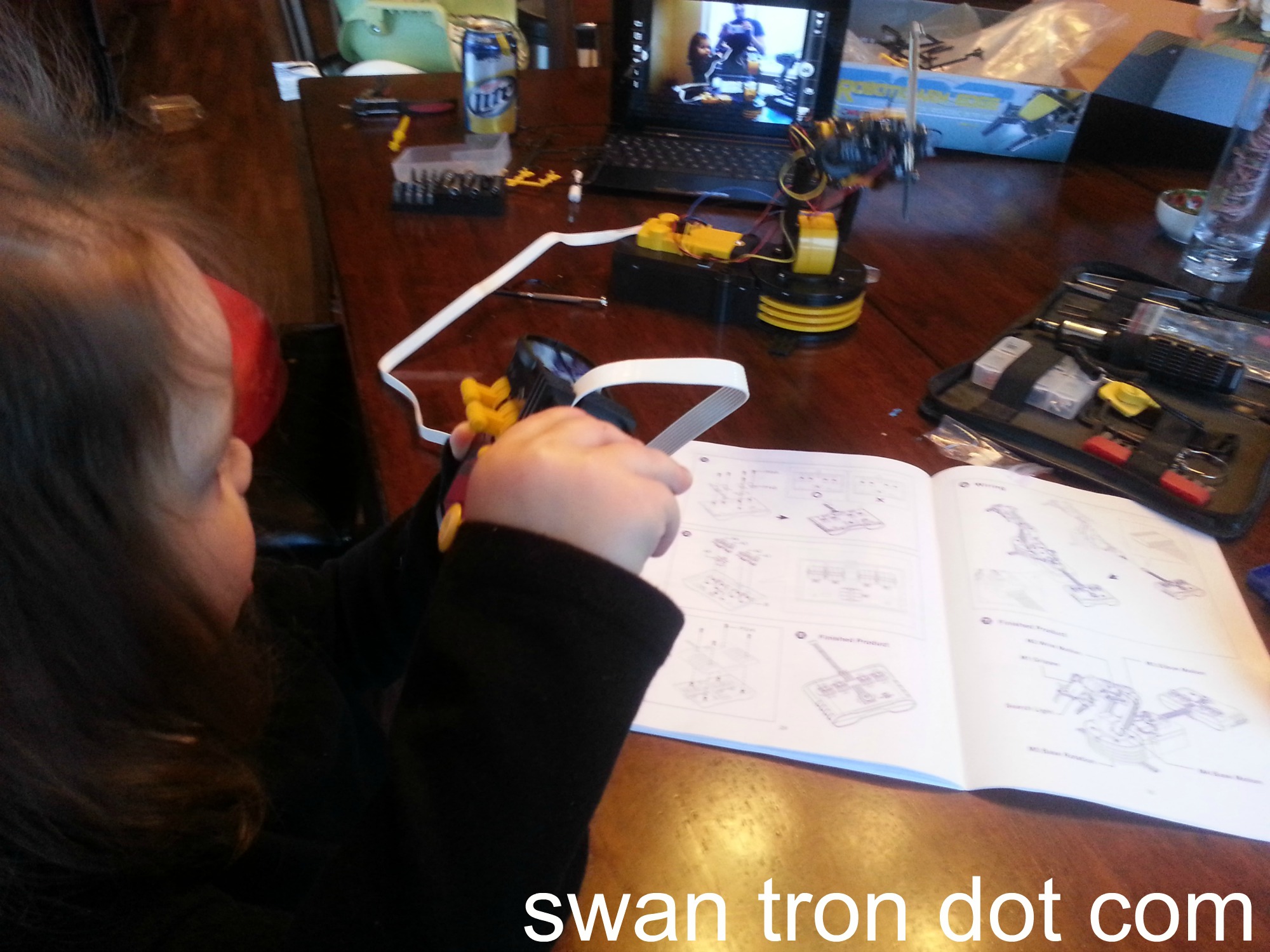
Testing Phase 2)
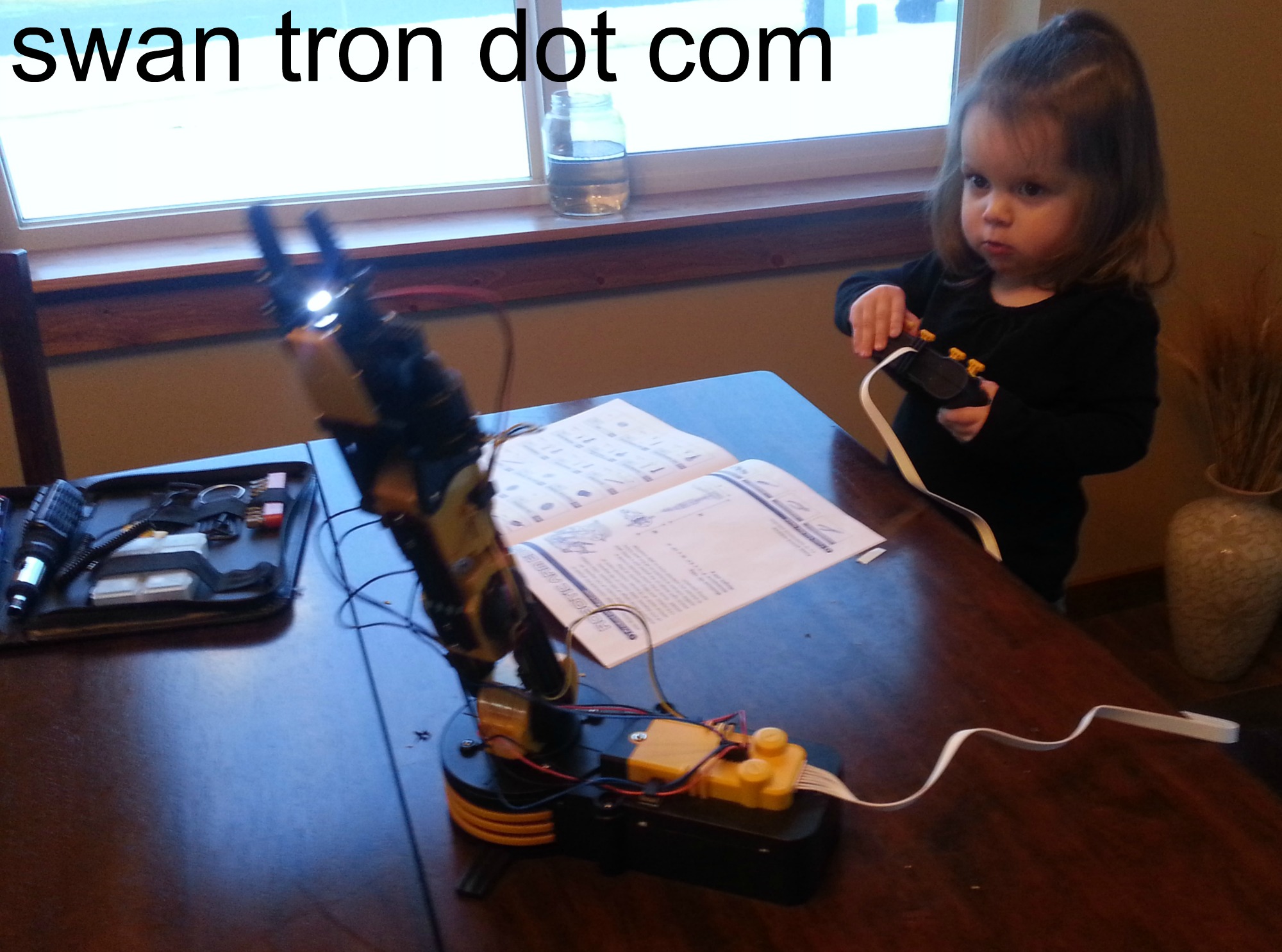
Emma figured out the remote pretty quickly, especially considering she has interfaced nearly exclusively with touch screen UIs. That may be next, in a round-about way. I’d like to stick some rPi brains in this and build a web UI, so the small assistant can run this with a phone or tablet. We’ll see where we end up with this.
At some point, I volunteered to make us some end tables for the house. It turns out that I really don’t like end tables…everything I came across was either way to big or too flimsy to take any kid abuse. The main level in our house is basically wide open, so keeping foot traffic lanes open is key. Long story short, I ended up in the copper area of Lowes and came up with a solution…
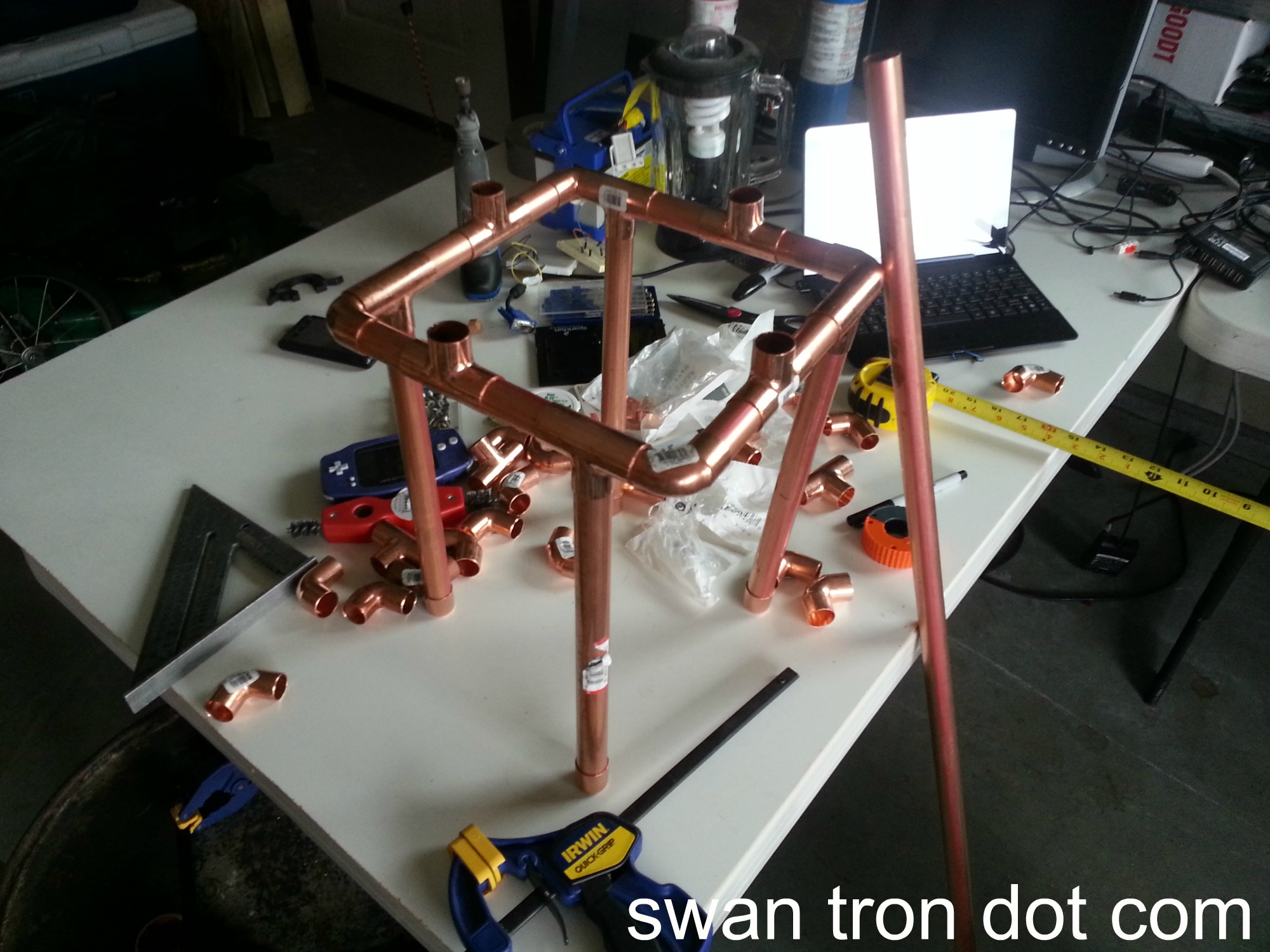
Maybe this is brilliant, or maybe my brain automatically looks for reasons to use my torch and Dremel. Probably the later.
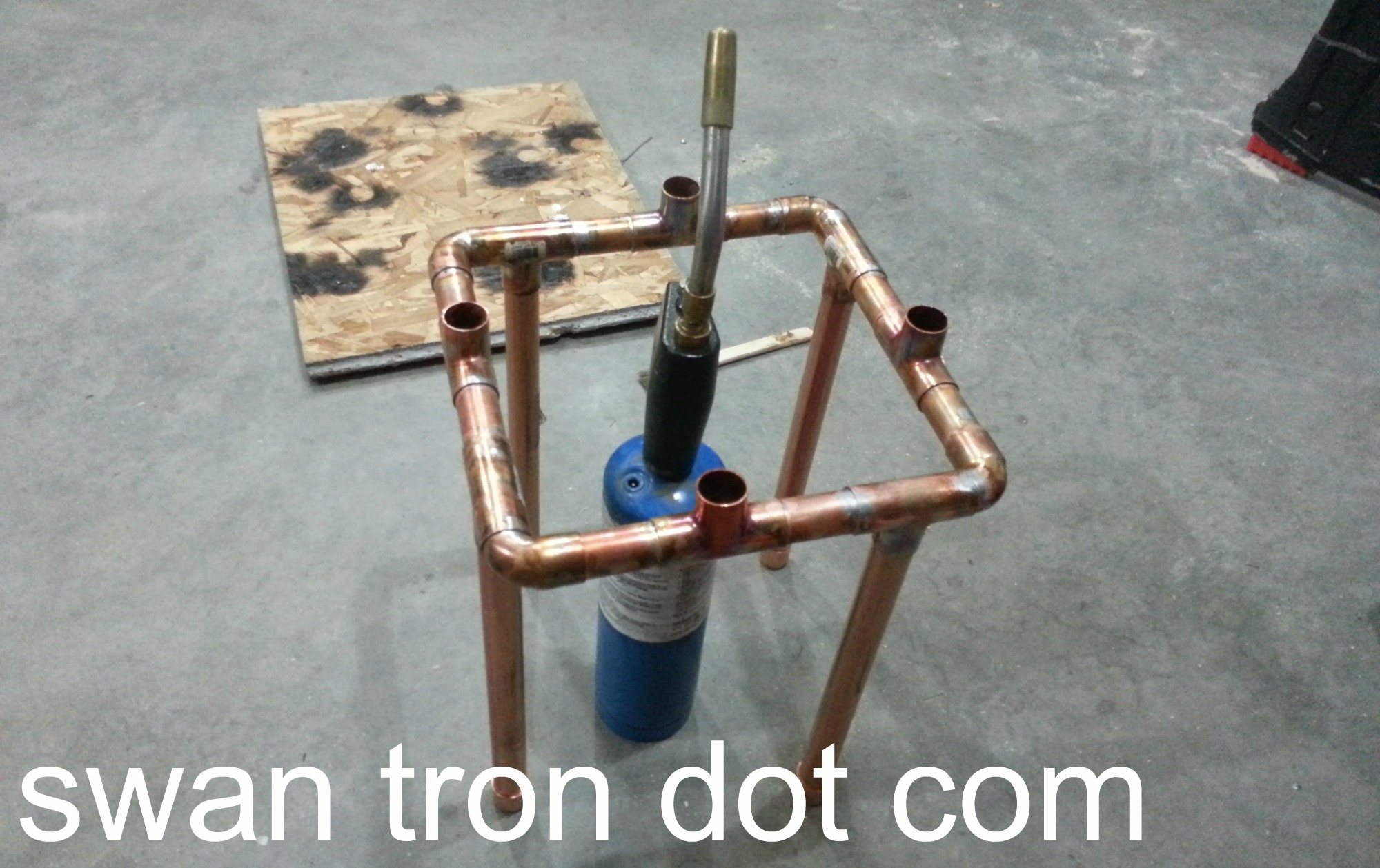
Emma was willing to help with the stress test, but unwilling to put down the GBA…
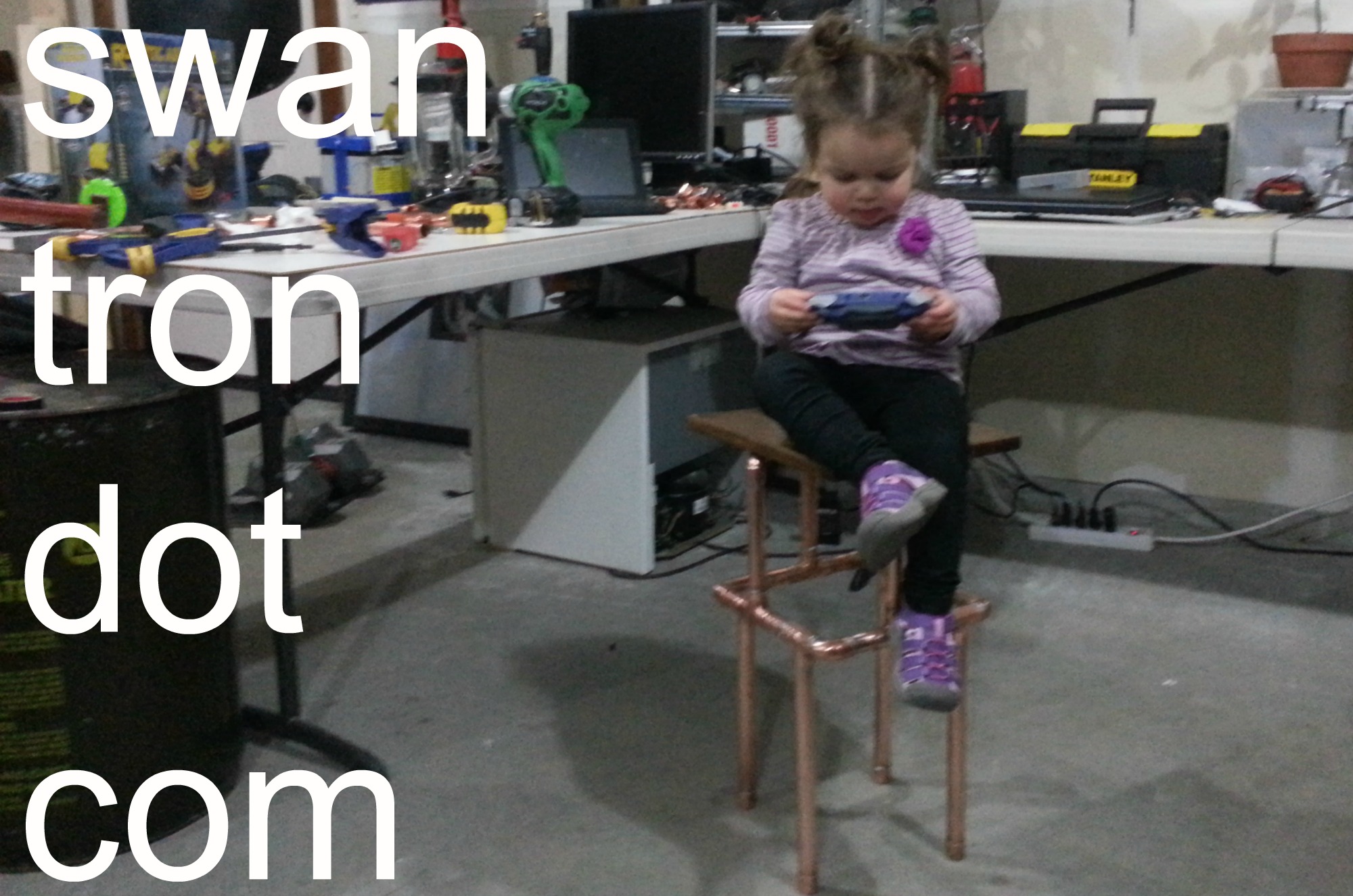
End result:
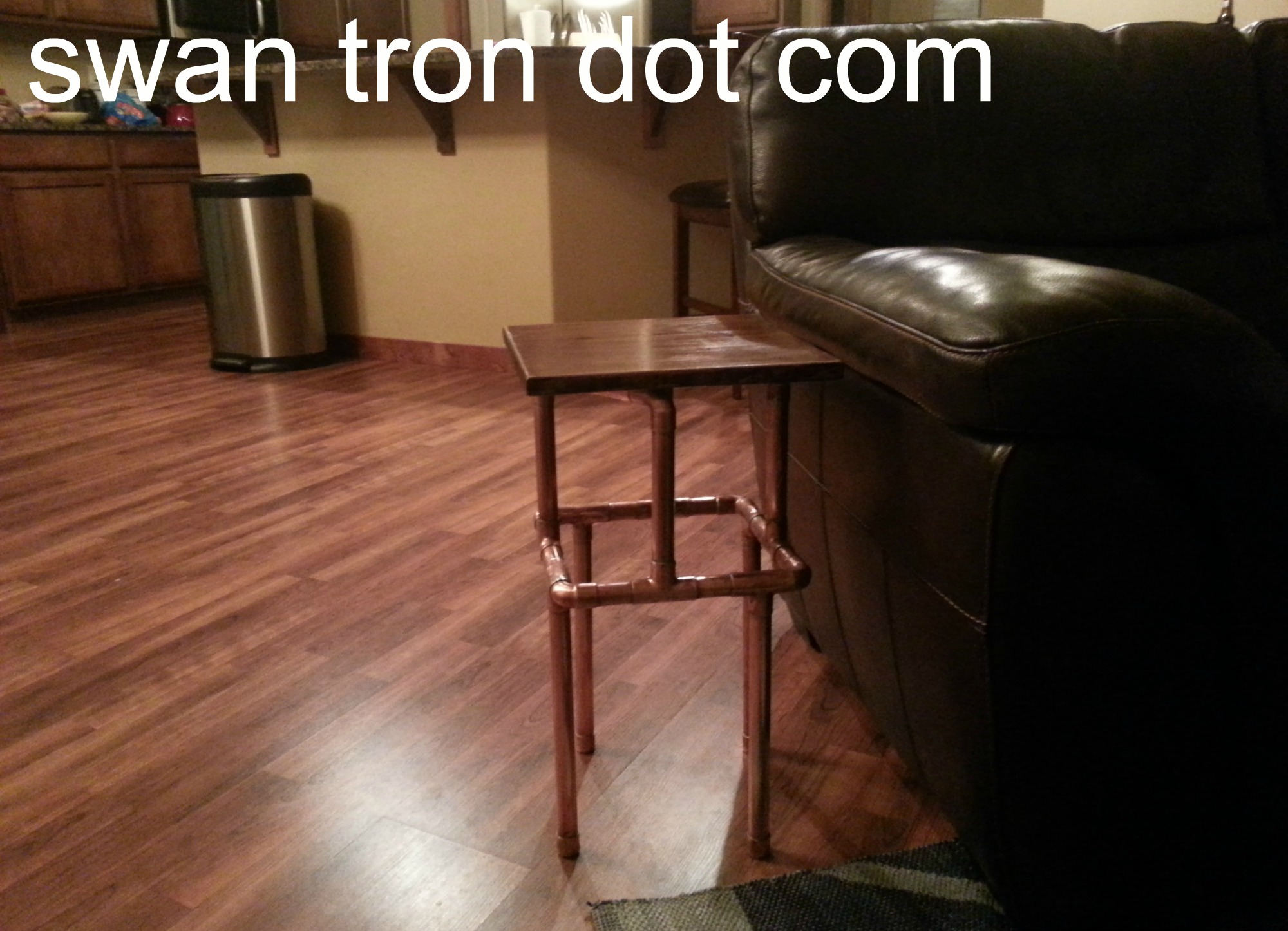
This actually turned out fairly decent, especially considering the fact I did all of the woodworking on that chunk of poplar with a Dremel Multi-Max. My soldering skills are more tuned to electronics, so I burned the shit out of the bulkier joints due to lack of flux. Adds character, I guess. I have another stick of 3/4" copper, so plan on doing round two as a winter project. I keep thinking that some sort of electrolysis setup would be awesome for the copper cleaning phase, which could be a project in itself. This project would be a lot more intense with a car battery and a whole bunch of wire.
I stumbled across something potentially amazing…cheap Chinese LED modules:
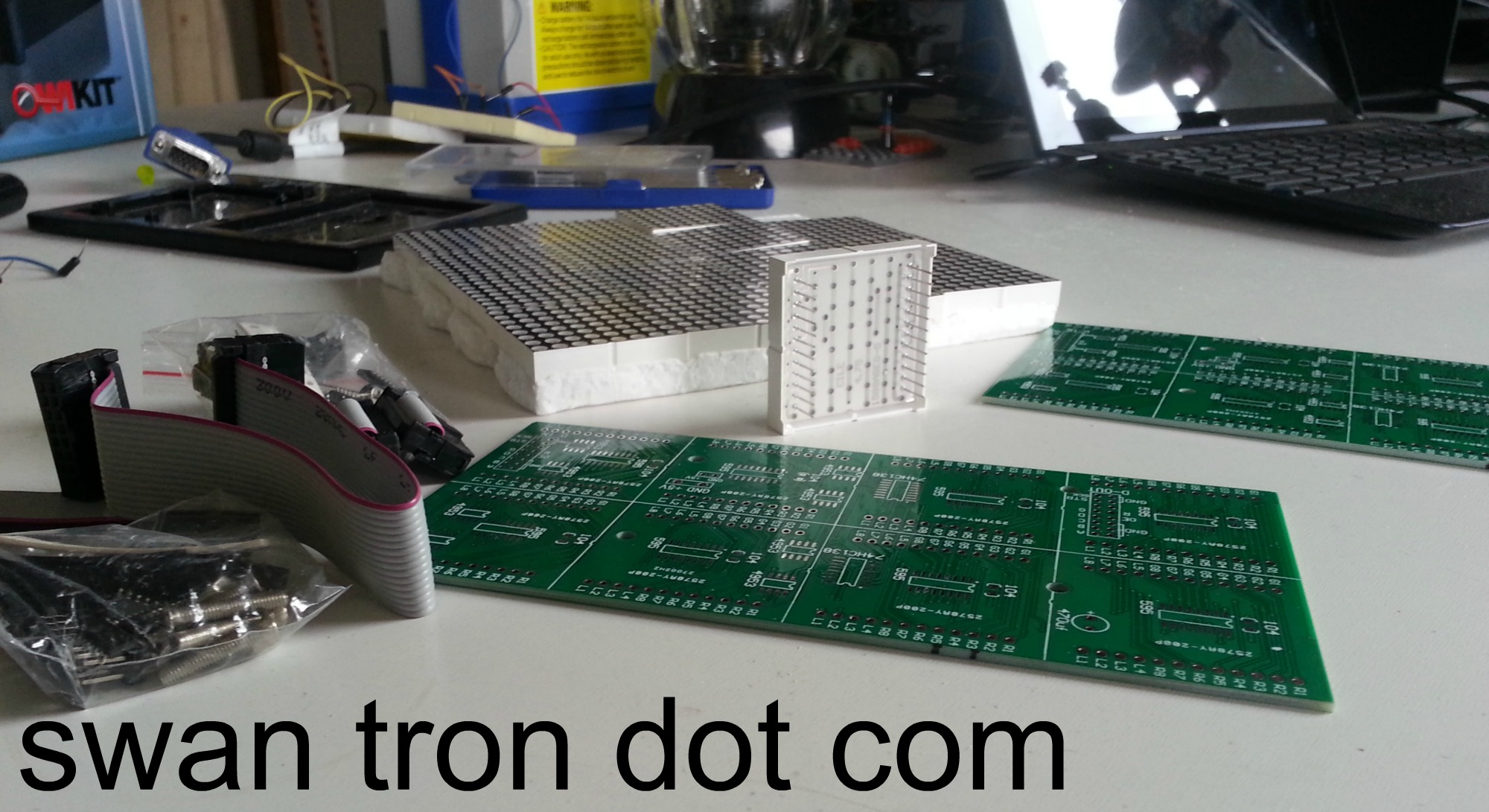
For $35USD, I now have everything I need to assemble a 64x64 LED matrix, provided I stay off the coffee long enough to knock out a billion solder joints. This should be fun, and potentially challenging. I’m guessing these were initially spec-ed out for a consumer with something pretty specific in mind, but going about this DIY is going in blind. There are no libraries to leverage, so the software will have to be written from the ground up. Time to blow the dust off of the Arduino…